
Ms. Aisha Qureshi

Ms. Aisha Qureshi Ms. Aisha Qureshi is a young microbiologist and independent researcher. Following the completion of M.Sc. (Microbiology) from Jinnah University for Women in 2018, she worked progressively on the Research topic “Microbial Assessment of Fishes Transported from Fisheries to Local Markets of Karachi, Pakistan”, for her M.Phil. studies. She worked in many laboratories […]
Ms. Shaista Urooj

Ms. Shaista Urooj With over 9 years of professional experience, spanning various prestigious institutions, such as including Shaheed Zulfiqar Ali Bhutto Institute of Science and Technology, Dow Research Institute of Biotechnology & Biomedical Sciences, Federal Urdu University of Science and Technology, Pakistan Council for Scientific and Industrial Research Laboratories, Aga Khan University, Dow Lab […]
Dr. Naveed Ahmad
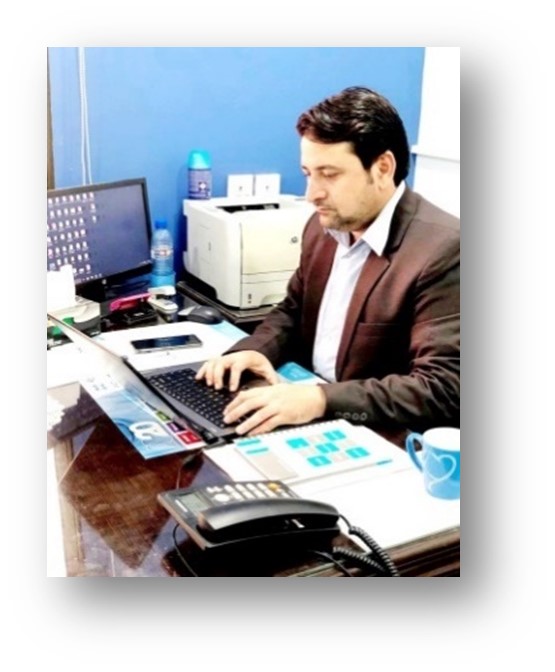
Dr. Naveed Ahmad Dr. Naveed Ahmed is a highly accomplished and dedicated professional with a strong background in Marine Biology/Fisheries & Aquaculture. After completion of his Ph.D. degree entitled “Effect of Variations in Feed Constituents, Feeding Regime and Stocking Density on the Growth of Seabream in Cage Culture”, he was appointed as Assistant Professor in […]
PAKISTAN FISHERIES REVITALIZATION
The underlying potential of Pakistan’s fisheries and aquatic resources is not reflected in current production, growth, and value. A leading challenge is the serious over-exploitation of marine fisheries stocks due to overcapacity in fishing fleets, illegal fishing methods, and lack of surveillance and licensing. No certification body for Marine Stewardship Certification (MSC) at present exists […]
WASTE WATER POLLUTION
Domestic households, industrial, and agricultural practices produce wastewater that can cause pollution in many lakes and rivers. Sewage is the term used for wastewater that often contains feces, urine, and laundry waste causing pollution. Sewage is treated in water treatment plants and the waste is often disposed into the sea.
SEAFOOD SAFETY & SECURITY ACCORDING TO INTERNATIONAL AND HALAL STANDARDS
With the globalization of the seafood industry, there is an increasing emphasis for producers, processors, exporters, and importers to adhere to stringent standards and regulations concerning food safety, quality, and traceability. International standards for seafood exports are rigorous, and failure to meet these requirements can result in the prohibition of seafood products. Consumers, in general, […]
MOBILIZATION OF MARINE FAUNA DUE TO URBANIZATION
BBOP defines biodiversity offsets as measurable conservation outcomes of actions designed to compensate for significant residual adverse biodiversity impacts arising from project development after appropriate prevention and mitigation measures have been taken.
VIRAL DISEASE OF PENAEID-SHRIMP
Shrimp aquaculture has been dramatically affected (mass mortality) by many diseases causing agents; mainly caused by viruses. Diseases are caused by the result of a series of linked events involving the interaction between host, environment, and the presence of pathogens. The experience of neighboring countries shows the potential for Pakistan to contribute to and benefit […]
MANGROVES REHABILITATION PROGRAMME
Mangroves are a group of trees and shrubs that live in the coastal intertidal zone. A unique mix of marine and terrestrial species lives in Mangal ecosystems. The still, sheltered waters among the mangrove roots provide protection, breeding, feeding, and nursery areas for fish, crabs, shrimp and other species important to commercial and recreational fisheries.
STUDY OF HARMFUL ALGAL BLOOM
Harmful algal blooms (HABs) are responsible for losses to natural resources and coastal economies. Amnesic shellfish poisoning is an illness caused by the consumption of a marine biotoxin called domoic acid. In mammals, including humans, domoic acid acts as a neurotoxin, causing permanent short-term memory loss, brain damage, and death in severe cases. Neurotoxic Shellfish […]