
Call us today!
+(92) 51 111-111-028
We are open!
Mon-Fri 8:30-04:30
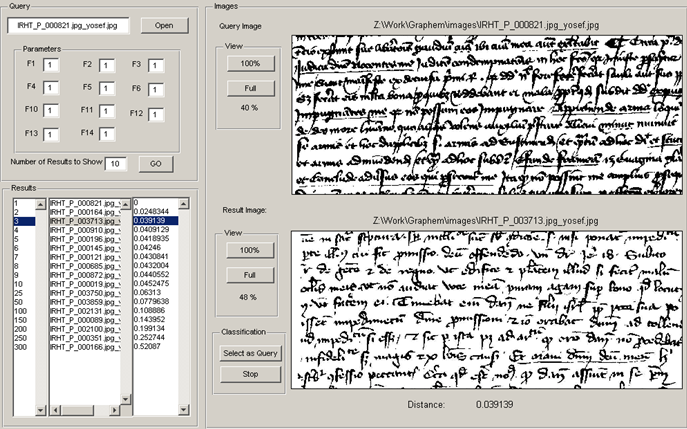
Analysis of Historical Manuscripts
Historical handwritten documents carry rich information providing useful insights into the past. Hand-drawn shapes, letters, drop caps and signatures not only provide write-specific details but, in a broader perspective, the influence of various cultural and social attributes is also reflected in the writing style as well as its evolution. The study of such ancient manuscripts to extract useful information is generally termed as paleography. More specifically, paleographers are typically interested in dating, deciphering and identifying the origin (and the associated cultural context) of a manuscript in their practice. Naturally, these tasks require extensive domain knowledge and specialized expertise to solve a given problem.
In the last two decades, there has been an increased tendency to digitize the historical manuscripts (in libraries and museums) either by scanning them or taking their photographs. This digitization not only serves to preserve the cultural heritage and make it available to the general public but also offers the opportunity to carry out research on these collections without the requirement of physically accessing them. This in turn has opened up a whole new set of challenging problems for the pattern classification community in general and document recognition researchers in particular. Our research on historical documents include development of computerized solutions for pre preocessing (binarization and segmentation), identifying the scribe (writer identification), classification of writing styles and estimating the date of origin of undated documents. Deep learning based solutions are being investigated to solve these challenging problems.