
Call us today!
+(92) 51 111-111-028
We are open!
Mon-Fri 8:30-04:30
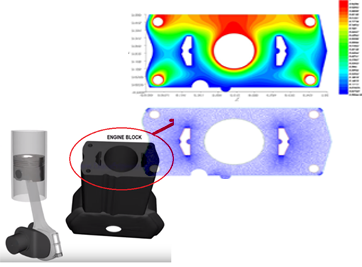
Modeling and Simulation At Surface of Engine Block
With the recent demand of improved efficiency, energy saving, reduction of pollution, etc. of cars, research on the high output and the miniaturization of engines has been performed vigorously. According to such trends, the output of engines have been increasing and engine structures have been placed in the thermal loading conditions that are much more excessive compared to the past. When the high-output engine gets into thermal loading condition, the temperature of the wall surface of the combustion chamber increases and the oil viscosity of the engine decreases. Due to the oxidation of the engine oil and others of the like, there is a danger of the ignition plugs and the valves melting down or exploding. Such thermal loading has a bad influences on the engine, and it also causes knocking, early ignition, the transformation of the cylinder bore, the scuffing of the ring, the transformation of the left side of the valve, etc. Therefore, the force exerted on the piston is reduced. Thereby, the reduction of the output of the organ and the lowering of the heat efficiency take place. As a result, the engine must operate within a reasonable temperature range. And, for this analysis, the clear and definite evaluations of such thermal loading must take place.